DeepSeek R1 vs ChatGPT vs Claude: Which Is Smarter?
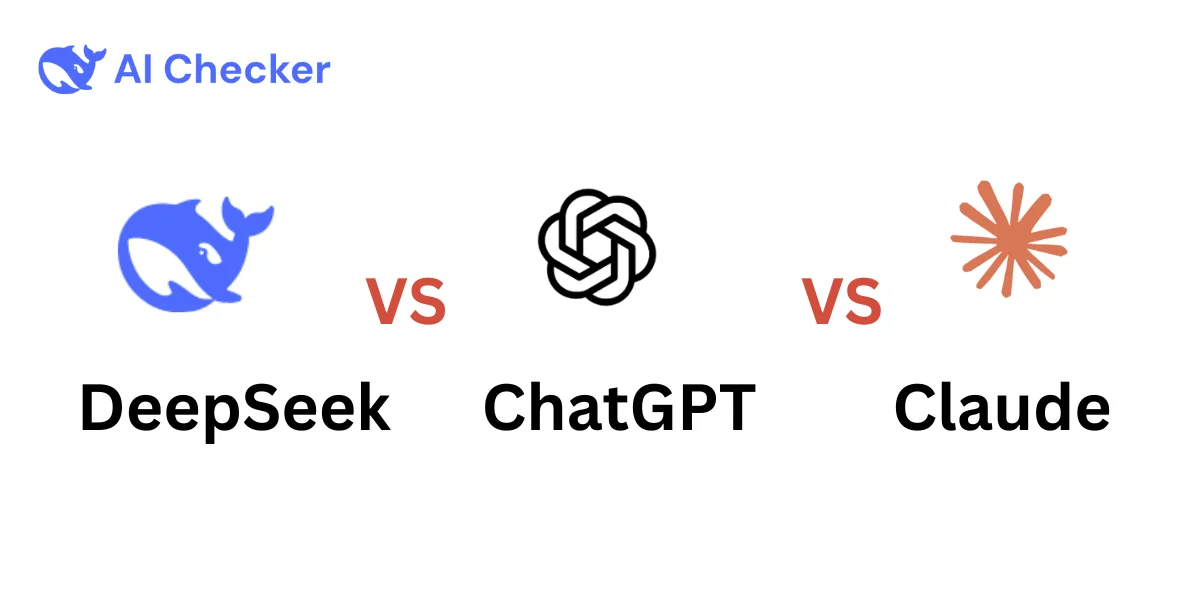
Artificial intelligence has entered a new phase where language models are no longer just tools for answering simple questions they are now capable of reasoning, coding, writing, and even assisting in decision-making. Among the most talked-about models today are DeepSeek R1, ChatGPT, and Claude.
Each of these models represents a different approach to intelligence. Some focus more on logic and structured thinking, others on creativity and usability, and some prioritize safety and contextual understanding. So, when we ask “Which is smarter?” The answer depends on what kind of intelligence we are measuring.
What Does “Smarter” Mean in AI?
Unlike humans, AI does not possess consciousness or real understanding. Its “intelligence” is evaluated based on performance across specific tasks. A smarter AI model is typically one that can:
- Solve complex problems accurately
- Understand and respond to human language naturally
- Adapt to different types of queries
- Provide reliable and consistent outputs
- Handle long and complex contexts
However, no single model dominates all these areas equally. This is where the comparison becomes interesting.
DeepSeek R1: Precision and Logical Intelligence
DeepSeek R1 has been designed with a strong emphasis on reasoning and technical accuracy. It stands out particularly in domains that require step-by-step thinking, such as mathematics, programming, and analytical problem-solving.
Where DeepSeek R1 Excels
One of its biggest strengths is structured reasoning. When given a complex problem, it tends to break it down into smaller logical steps before arriving at a conclusion. This makes it highly effective for:
- Solving mathematical equations
- Writing and debugging code
- Logical puzzles and analytical tasks
- Technical explanations
In many benchmark-style tasks, DeepSeek R1 performs at a very high level, especially when precision is required.
Where It Falls Short
Despite its strengths, DeepSeek R1 is not as refined in conversational or creative tasks. Its responses can sometimes feel:
- Less natural or engaging
- More rigid in tone
- Limited in storytelling or emotional depth
This means that while it may be “smarter” in technical domains, it is not always the best choice for general-purpose use.
ChatGPT: Versatility and Balanced Intelligence
ChatGPT is widely recognized for its balance. It does not focus exclusively on one type of intelligence but instead aims to perform well across a broad range of tasks.
Key Strengths of ChatGPT
The biggest advantage of ChatGPT is versatility. It can handle:
- Casual conversations
- Creative writing (blogs, stories, scripts)
- Technical queries and coding
- Educational explanations
- Business and productivity tasks
Its conversational style is one of the most natural among AI models, making it accessible to both beginners and professionals.
Another major strength is its adaptability. Whether you ask a simple question or a complex one, ChatGPT adjusts its response style accordingly.
Limitations to Consider
Because it tries to do everything well, ChatGPT may not always be the absolute best in a specific niche. For example:
- It may not match DeepSeek R1 in deep technical reasoning
- It can occasionally provide confident but incorrect answers
- Performance may vary depending on prompt clarity
Still, its overall balance often makes it feel like the “smartest” option for everyday use.
Claude: Thoughtful Intelligence and Context Mastery
Claude takes a slightly different approach by focusing heavily on context, safety, and thoughtful responses.
Where Claude Stands Out
Claude is particularly strong in tasks that involve:
- Long documents and detailed analysis
- Summarization and interpretation
- Ethical reasoning and sensitive topics
- Maintaining context over extended conversations
It is known for producing responses that are more cautious, nuanced, and carefully worded. This makes it highly reliable in professional or research-based scenarios.
Limitations of Claude
However, this cautious approach can sometimes become a drawback:
- It may avoid answering certain questions
- Responses can feel overly safe or indirect
- It is not as strong in coding compared to DeepSeek R1
Despite this, Claude is often considered one of the most trustworthy AI systems in terms of tone and reasoning.
A Deeper Comparison of Intelligence
To better understand which model is smarter, it helps to compare them across key dimensions.
1. Logical Reasoning
- DeepSeek R1 leads with its step-by-step problem-solving ability
- ChatGPT performs well but is slightly less consistent in complex logic
- Claude is thoughtful but not as technically sharp
Winner: DeepSeek R1
2. Creativity and Expression
- ChatGPT produces engaging, human-like content
- Claude offers well-structured but less dynamic writing
- DeepSeek R1 is the weakest in creative tasks
Winner: ChatGPT
3. Context Understanding
- Claude excels in handling long and complex inputs
- ChatGPT is strong but may lose context in very long interactions
- DeepSeek R1 focuses more on logic than context depth
Winner: Claude
4. Accuracy and Reliability
- Claude is the most cautious and reliable
- DeepSeek R1 is accurate in technical domains
- ChatGPT is generally reliable but can occasionally hallucinate
Winner: Claude
5. Overall Usability
- ChatGPT is the easiest and most flexible to use
- Claude is user-friendly but slightly more formal
- DeepSeek R1 is more suited for advanced users
Winner: ChatGPT
So, Which AI Is Truly Smarter?
The idea of one AI being universally smarter than others is misleading. Intelligence in AI is task-specific, not absolute.
- If your priority is technical accuracy and logical reasoning, DeepSeek R1 is likely the smartest choice
- If you want a well-rounded assistant for everyday use, ChatGPT stands out
- If you value deep understanding, safety, and thoughtful responses, Claude is the best option
In reality, these models complement each other rather than compete directly.
Conclusion
The comparison between DeepSeek R1, ChatGPT, and Claude reflects the broader direction of AI development. Instead of building a single “perfect” model, companies are creating systems optimized for different strengths.
As AI continues to evolve, the gap between these models will likely shrink, but their core philosophies reasoning, versatility, and safety will remain important differentiators.
Ultimately, the smartest AI is not the one with the highest benchmark score but the one that best fits your needs and helps you achieve your goals efficiently.
FAQs
1. Which AI is the smartest overall?
No single AI is the smartest; each model excels in different areas.
2. Is DeepSeek R1 better than others?
It is better for reasoning, coding, and technical tasks.
3. Why is ChatGPT popular?
Because it is versatile, easy to use and good for many tasks.
4. What makes Claude different?
It focuses on safety, context and thoughtful responses.
5. Which AI is best for writing content?
ChatGPT is generally the best for creative writing.
6. Which AI is best for coding?
DeepSeek R1 performs best in coding and technical work.
7. Is Claude safer than other AI models?
Yes, it is designed to provide more careful and safe responses.
8. Can I use all three AI models together?
Yes, combining them can give better overall results.